
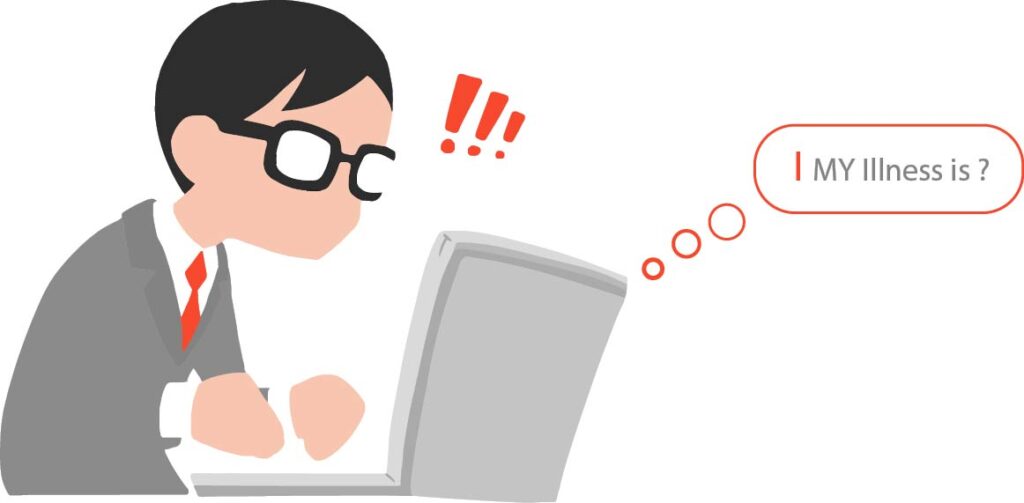
We live in the digital age, an age where most information is a single click away. As humans, we like to know about things, especially when it intimately concerns us like health. So, the moment we develop a symptom or illness we reach out to the phone we do a Google search or a YouTube search. Unfortunately, this way of doing things comes with its drawbacks also.
The Drawbacks
What most do, is that the moment a person has a particular worrying symptom they search online based on that. The problem with this is that, say a symptom such as a cough. It is non-specific and could occur due to a wide variety of reasons starting from a simple flu to covid, lung cancer, or any number of exotic illnesses. Now a person who does an online search is presented with a buffet of choices leaving a layperson confused and even worse scared. This kind of non-specific searches ends up making a person more worried than relieved on top of being sick.
The second problem is when a person reads up on such vague knowledge, they knowingly or unknowingly imbibe half-baked knowledge. The main problem is not the imbibing, the problem is when the patient meets a doctor, they end up giving details in such a manner based on the imbibed knowledge which may not be at all an accurate description of what the patient is experiencing. The patient does not do this with any bad intention, but the knowledge he/she has soaked up has convinced them somewhere along the way that they have a particular illness, and based on this assumption they end up describing to the doctor what they ‘think’ they are feeling not what they are feeling. This can result in a wrong diagnosis and unnecessary expensive tests thus delaying reaching a diagnosis or worse starting on treatment that was not needed.
The third kind of problem is when people read up about medicine and its side effects. As soon as a medicine is prescribed people nowadays search online and if they find enough material to scare them, they don’t even take the medicine thus worsening their illnesses. Any medicine has its effect and its side effects. These side effects can vary from mild and temporary to seriously disabling and extremely rare. It is a doctor’s duty to weigh the pros and cons before recommending a treatment. If there are problems associated with medicines the doctors warn the patient and usually a contact number is provided for communication in case of emergencies. The problem with online searching is that most websites list all the side effects starting from the most common to the rarest and for a layperson, this can be an intimidating sight. The next thing is sometimes websites may suggest medicines and tests which may be expensive and unnecessary where a simple medicine would suffice. The doctor is supposed to be an expert in his field and he will have the know-how of the type and dose required and you are paying for this expertise when you visit the doctor.
One final drawback is information overload. The Internet gives us access to a lot of information, but too much information is as bad as little information. Reading too much about illness can over overwhelm a person and can end up paralyzing a person when making choices.
But let’s face it, Internet searches have become a part of our life and this habit is here to stay. This leads to our question-
How to effectively learn about illnesses?
The first recommendation I would make is- Wait for a Diagnosis!
Consulting a doctor and knowing a proper diagnosis will make your life a lot easier and help you in focusing your searches on what is relevant. You can then learn about the specific topic alone, thus saving you time and providing you peace of mind.
The next thing I would recommend is when you are consulting your doctor ask him about any doubts or worries you have and clarify with them. In India, we sometimes hesitate to ask and later on, we worry about our doubts. A few extra minutes clarifying your doubts can save you hours of unnecessary online searching.
When dealing with chronic illnesses especially, for example, Diabetes, we would always like to know more and would like to do our part in improving our condition. The brief hospital visit may not answer all our questions or provide us with enough guidance, and that’s where websites can help. One tip is to ask your doctor about what resources are available online. The doctor can recommend certain reliable websites where patient education materials are available which are accurate and easy to understand.
The next piece of advice I would give is to pick a few select and trusted websites. Quality matters over quantity. A few trusted sources are worth more than hundreds of vague sources. This ensures that what you are reading is worth your time and effort.
My final piece of advice, limit the number of things you read. Too much information as I said can cause information overload and decision paralysis. So personally, I would recommend sticking to 2-3 sources and not more than 5 to read from. If you still have concerns and doubts, note them down and discuss them with your doctor during your next visit.
Hopefully, this article will make you better equipped when you do an online search about illnesses.
Resources & Credits
Image by OpenClipart-Vectors from Pixabay