The name MDMA has been making headlines in recent years, with reports of increased use and people getting arrested. So, What exactly is MDMA ? and what does it do?
MDMA is a shortened version for the chemical product 3,4- methylenedioxy- methamphetamine. The other aliases by which MDMA is known are mainly Ecstacy and Molly. It is a synthetic substance, meaning it is a chemical produced in labs.
Origins
It was developed accidentally as a byproduct of a competition between two pharma companies over the next new drug to stop bleeding. Though it was never used for the same. During the following years it was forgotten until it made its reappearance in 1980’s as a drug for treatment in psychological clinics as an ‘empathogen’, a drug which can increase empathy and later illegally in the streets. Following realization of its harmful effects the drug was declared illegal.
What does MDMA do?
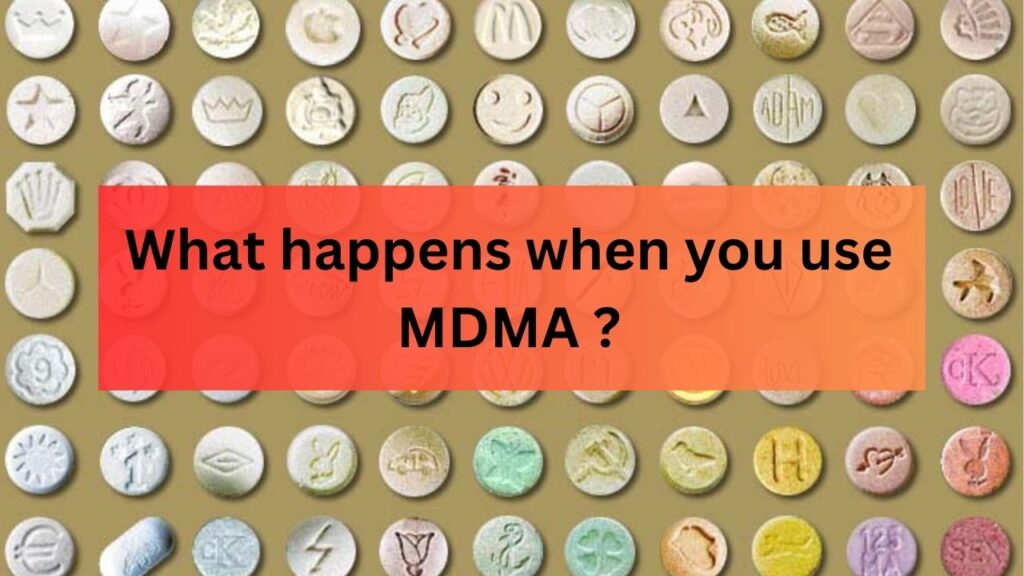
MDMA is popular as a party drug. It is available as a powder, pill or crystal form. It can be used either by inhaling into the nose(snorting), orally or by IV injection. The outward appearance of the drug may vary based on the producer, so you may see products with a variety of colour and logos on pills.
MDMA primarily affects three local chemicals in your brain: serotonin, dopamine, and norepinephrine. These chemicals play a significant role in regulating mood, energy levels, and emotional responses. Thus the association as a party drug.
Using MDMA causes-
- Euphoria: A strong sense of happiness and well-being.
- Increased sociability: Enhanced feelings of empathy and heightened emotional closeness to other people.
- Altered sensory perception: Enhanced appreciation for lights, sounds, and tactile sensations.
- Increased energy and alertness: Users often feel more awake and active.
Undesired effects
Psychological effects
An exaggeration of the effects for which the drug is taken. The increased arousal, if carried to excess, is converted into hyperactivity, racing thoughts and insomnia.
Mild hallucinations, depersonalization (a feeling of separation of the self from the body), anxiety, agitation, and bizarre or reckless behaviour. Occasionally these symptoms lead to panic attacks, delirium or even brief psychotic episodes that usually (but not always) resolve rapidly when the drug action wears off. The day or 2 after drug use, the most common mental or mood complaints are difficulty concentrating, depression, anxiety and fatigue. These symptoms strongly resemble, in miniature, the “crash”.
Some psychological problems may last months or years. Problems include-
Memory disturbances, decision making difficulty, decreased ability to process information, greater impulsivity, lack of self control. Psychiatry illnesses like Psychosis and Depression may develop.
Physical
Because the basic action of the amphetamines involves increased arousal and alertness, it is usually accompanied by an increase in tension, which is manifested as muscular tension which may present as body pains, jaw clenching, tooth grinding (bruxism) and constant restless movement of the legs.
The increased muscle activity, together with a direct action of the drug on the temperature regulation system in the brain leads to an increase in body temperature. This can cause muscle breakdown, the products of the breakdown can damage kidneys.
Because of problems with heat regulation, people may take excess water unknowingly, altering the levels of sodium in the body which results in brain damage.
Headache, nausea, loss of appetite, blurred vision, dry mouth and insomnia are other commonly reported physical symptoms during the drug experience and immediately afterwards.
Heart rate and blood pressure may vary even during the following days. Blood vessels may burst in the heart, eyes and brain.
MDMA is broken down in the liver. Toxicity can cause liver damage and even liver failure.
Studies show that MDMA damages nerves producing serotonin in the brain and decreased number of nerves is seen in autopsy
It takes at least 40 hours for the drug to completely leave the body.
The Unwanted cousins
Another scary aspect is the occurrence of adulterated drugs. Sometimes other drugs which have almost the same effects as MDMA are sold as MDMA. But they are even more dangerous. Surveys in some countries have found that at times almost 50% of drugs sold as MDMA have 0% MDMA in them.
Legality
In India MDMA is illegal and getting caught with it can result in Jail time.
Thus, we can see that the so-called party drug carries much more risk than it is worth.
References:
Images Sourced from: Freepik.com